Rotary Die Cutting and Flatbed Die Cutting can both process adhesive tape, film, foam, rubber, metal foil, and other materials into specified shapes. However, the two processes operate differently and vary in their suitability for material thickness, production speed, part size, tooling, and order volume.
In this article, iTrustfab compares Rotary and Flatbed Die Cutting in terms of working principles, performance differences, suitable materials, and production requirements to provide a practical reference when selecting between the two processes.
1. Working Principles of Rotary Die Cutting and Flatbed Die Cutting
Rotary Die Cutting and Flatbed Die Cutting are both methods of using a die to make cuts into a material that is fed through in a specified shape, but they differ in terms of the structure of the die, the method of cutting and the material feeding. Below, the basic working principles of the processes are described.
1) Working Principle of Rotary Die Cutting
Rotary Die Cutting is cutting which is done with a cylinder shaped Die and Anvil Roll. The material is continuously fed into the die cutting station by a roller system. During the rotation of the cylindrical die in the machine, the machine will continuously be carrying out Full Cut, Kiss Cut, perforation and other processing operations as the material is transported.
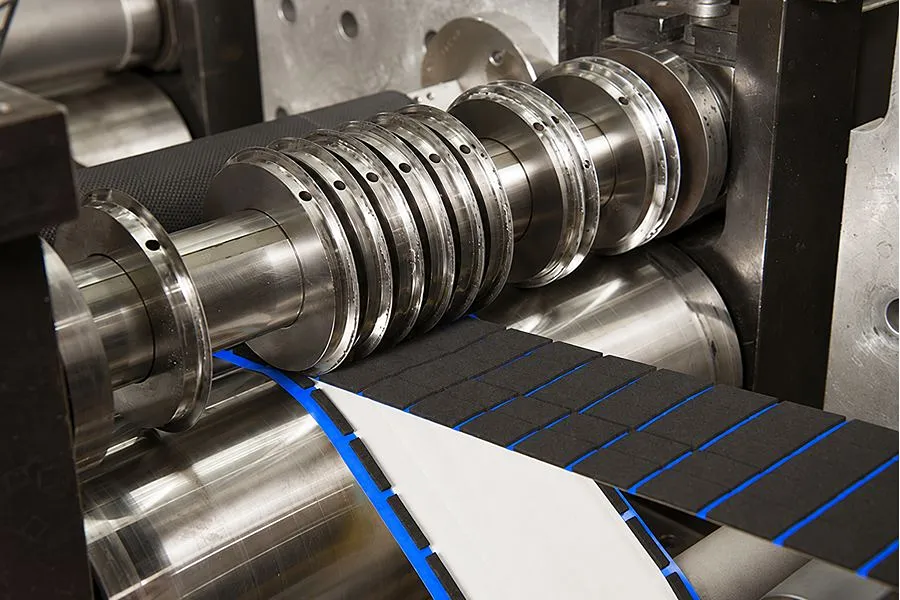
Rotary Die Cutting Process
2) Working Principle of Flatbed Die Cutting
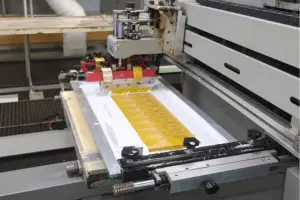
Flatbed Die Cutting is a technique that applies pressure to the material from the top of the press. The material is fed forward as the die descends to perform one cut and ascends for the next. The most common Flatbed process involves a Steel Rule Die that is bent to the shape of the product and is attached to a Die Board.
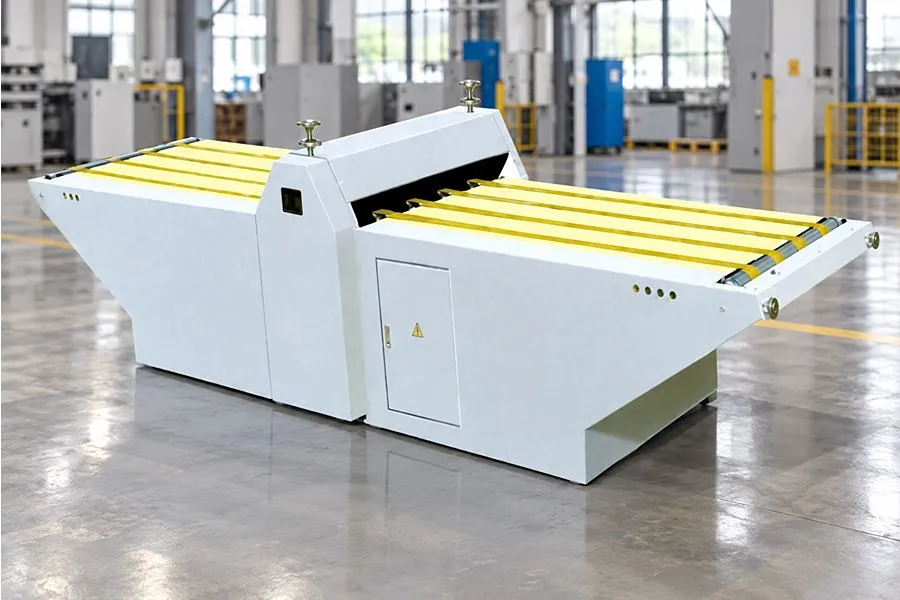
Flatbed Die Cutting Process
3) Differences in Working Principle Between Rotary and Flatbed Die Cutting
The key difference is that cutting is done in different directions and the material moved differently. The material continually passes through the die rollers, and a rotating die is used by rotary. In flatbed, a flat die is used for multiple cuts in a vertical plane and the material is pushed forward in-between cuts.
2. Main Performance Differences Between Rotary and Flatbed Die Cutting
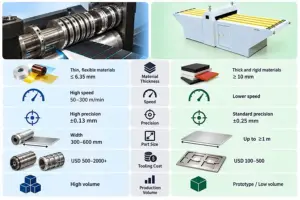
Rotary and Flatbed are applied with different process structures, which means they can process different material thicknesses, with different production efficiency, processing accuracy, part size, tooling cost and production volume. These are contrasted in the succeeding sections.
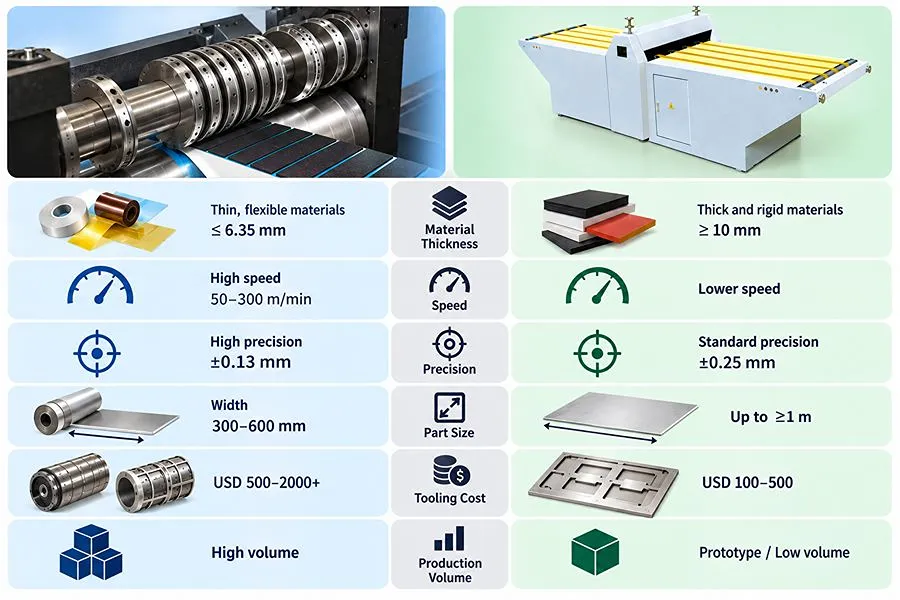
Rotary vs. Flatbed Die Cutting
1) Suitable Material Thickness
The main applications of Rotary are thin flexible roll materials like Adhesive Tape, PET, PC, PI, thin Foam and Metal Foil. The actual ability of the machine depends on the machine and varies from machine to machine and some industrial Rotary may be able to process material up to about 6.35 mm thick.
For thicker materials, Flatbed has a broader capability range and is often used for thicker Foam, Rubber, Silicone and sheet materials. Depending on machine tonnage, die design, material hardness/compressibility, some industrial Flatbed equipment can process materials greater than 10 mm thick.
2) Processing Speed and Production Efficiency
Rotary employs the continuous roll cutting method which means that it feeds continuously, cuts out the parts and discards the waste. It offers increased production rates and is usable for continuous high volume production. Common machine speeds are found at 50-200m/min, and some servo machines have a maximum speed of up to 300m/min.
Intermittent cutting is used in flatbed. Feeding, cutting and feeding again are necessary for each cycle, which means the overall production efficiency is generally lower than Rotary.
3) Processing Accuracy and Consistency
Rotary feeding is combined with rotary die cutting and it is suitable for long run precision production. Rotary Die Cutting tolerances are typically ±0.13 mm, and can be tighter for certain processes and part designs. Also during long runs, dimensional and registration consistency will be better.
The typical dimensional tolerance for Flatbed using a Steel Rule Die is about ±0.25mm, and even greater accuracy can be achieved with Solid Milled Dies or Matched Metal Dies.
4) Part Size and Processing Range
The maximum Rotary processing width is determined by the machine Web Width and die-roll width. Precision rotary die-cutting equipment commonly provides an effective processing width of approximately 300–600 mm. Parts must be nested within this web width, while the length direction can be processed continuously with the roll material.
Flatbed part size is determined by the press bed and die dimensions. Typical equipment can process sheet materials ranging from several hundred millimeters to over 1 m, making it more suitable for large Gaskets, Foam Pads, and Insulation Sheets.
5) Tooling and Production Cost
Flatbed commonly uses Steel Rule Dies, which have a simple tooling structure and generally lower initial tooling cost.
Rotary can use Flexible Dies or Solid Rotary Dies. Flexible Dies cost less and are easier to change, while Solid Rotary Dies cost more but provide better durability and long-term operating stability.
Based on actual quotation ranges from some U.S. precision die-cutting manufacturers, initial Flatbed tooling is approximately USD 100–500, while Rotary Tooling is approximately USD 500–2,000. Complex Cylindrical Rotary Dies may cost several thousand dollars.
6) Suitable Production Volume
Rotary is more suitable for the stable production of high volume and repeat production, particularly in products that need to be fed continuously, sorted out and rewound.
Flatbed is more appropriate for prototypes, low-volume production, and when the design is subject to change. It is also often used for thicker materials.
3. Materials Suitable for Rotary Die Cutting
Rotary Die Cutting is mainly used for thin, flexible roll materials that can be fed continuously. Common materials include Adhesive Tape, Plastic Film, Foam, Metal Foil, and multilayer composite materials.
1) Adhesive Tape and Double-Sided Tape
Pressure-Sensitive Adhesive, Double-Sided Tape, and Transfer Tape are common Rotary processing materials and are typically supplied in rolls. These materials are thin and flexible and usually include a Release Liner. Rotary can control Kiss Cut depth consistently, cutting through the adhesive layer or face material while leaving the bottom Liner intact.
2) PET, PC, PI, and Other Film Materials
PET, PC, PI, and similar films are thin and flexible, allowing stable roll feeding and making them suitable for continuous Rotary die cutting.
Typical film thickness is approximately 0.025–0.5 mm. When the material includes Adhesive, Protective Film, or a Release Liner, multilayer registered cutting can also be used.
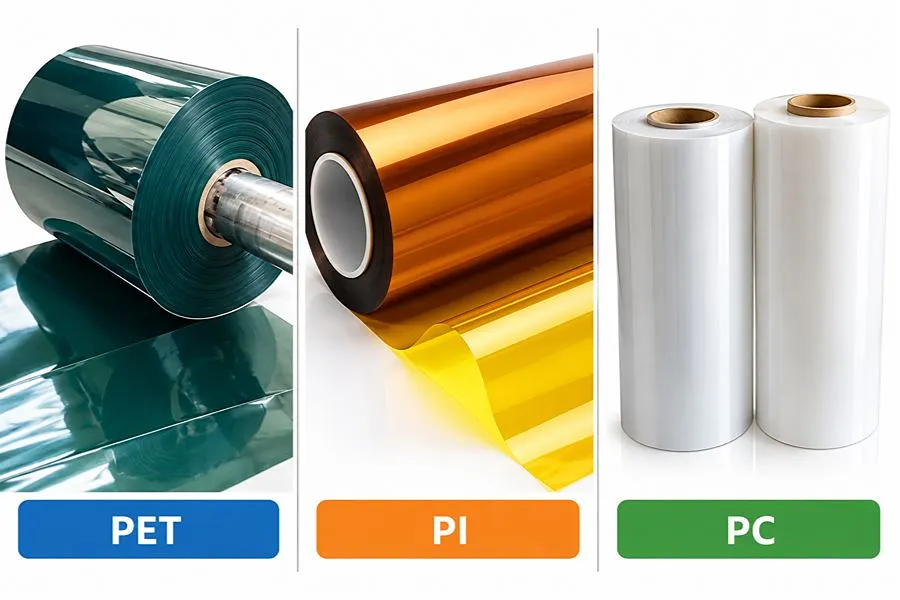
PET, PI, PC Materials
3) Foam and Flexible Materials
Thin PE, PU, EVA, PORON, and similar Foams can be processed by Rotary, particularly Foam and Foam Tape supplied in roll form.
Typical thin Foam thickness is approximately 0.2–2 mm. As thickness and compression increase, the requirements for die penetration depth and feeding stability also increase. Thicker Foam is generally more suitable for Flatbed.
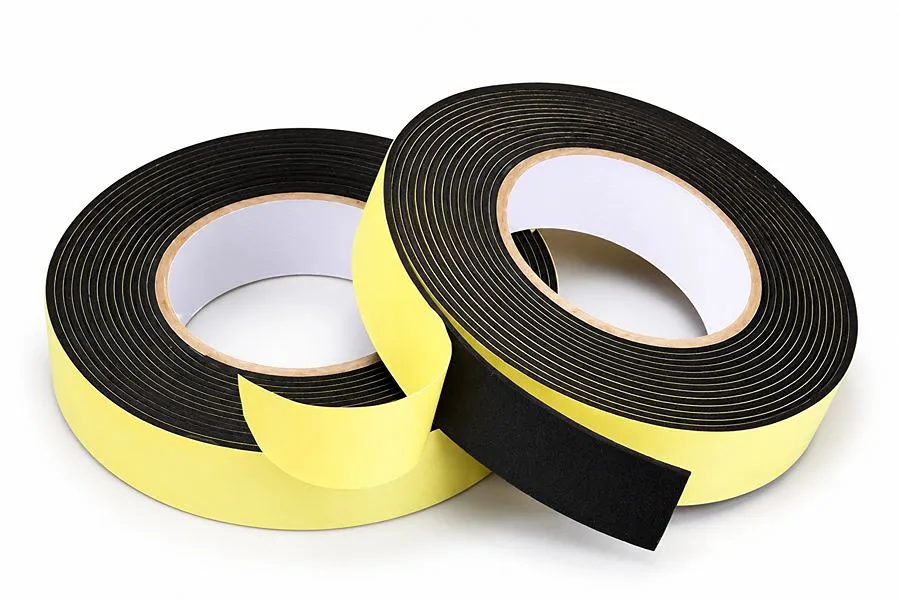
Foam Materials
4) Copper Foil and Aluminum Foil
Thin Copper Foil, Aluminum Foil, and adhesive-backed metal foils can be continuously die-cut using Rotary. Typical applications include EMI Shielding, Grounding, Conductive Tape, and Heat Dissipation Parts.
Typical metal foil thickness is approximately 0.01–0.2 mm. For a Foil + Adhesive + Release Liner structure, Kiss Cutting can be used while retaining the bottom release liner.
5) Multilayer Composite Materials
Rotary is suitable for continuous processing of multilayer flexible materials, for example: PET + Adhesive + Foam + Release Liner.
These materials can remain in roll form for continuous feeding, while different dies control the cutting depth of each layer to complete Full Cut, Kiss Cut, and multilayer registered cutting.
4. Materials Suitable for Flatbed Die Cutting
Flatbed Die Cutting accommodates a wider range of material thicknesses and feed formats. It is commonly used for thicker Foam, Rubber, Silicone, insulation materials, sheet materials, and thick composite materials.
1) Foam and Other Thick Cushioning Materials
Thicker PE, EVA, PU, and EPDM Foam are common Flatbed materials, mainly used for Foam Gaskets, Cushion Pads, Sealing Pads, and Vibration Pads. For example, 3 mm, 5 mm, and 10 mm EVA or PE Foam sheets can be die-cut directly using Flatbed.
2) Rubber and Silicone
Rubber, Silicone, EPDM, and Neoprene are commonly processed by Flatbed. Typical products include Gaskets, Seals, Washers, and Vibration Pads. Flatbed’s vertical cutting action is suitable for these thicker, elastic materials.
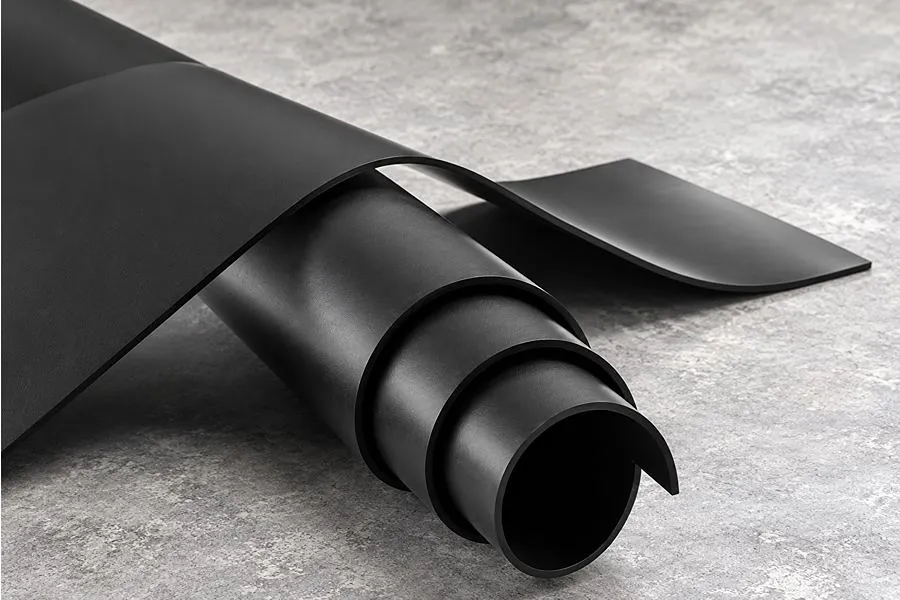
Rubber and Silicone Raw Materials
3) Insulation and Gasket Materials
Sheet materials such as Fiber, Gasket Paper, Felt, and Electrical Insulation Sheet are suitable for Flatbed processing.
These materials are typically fed directly as Sheets and delivered as individual Pieces or Sheets after cutting. Common applications include Electrical Insulators, Spacers, Gaskets, and Protective Pads.
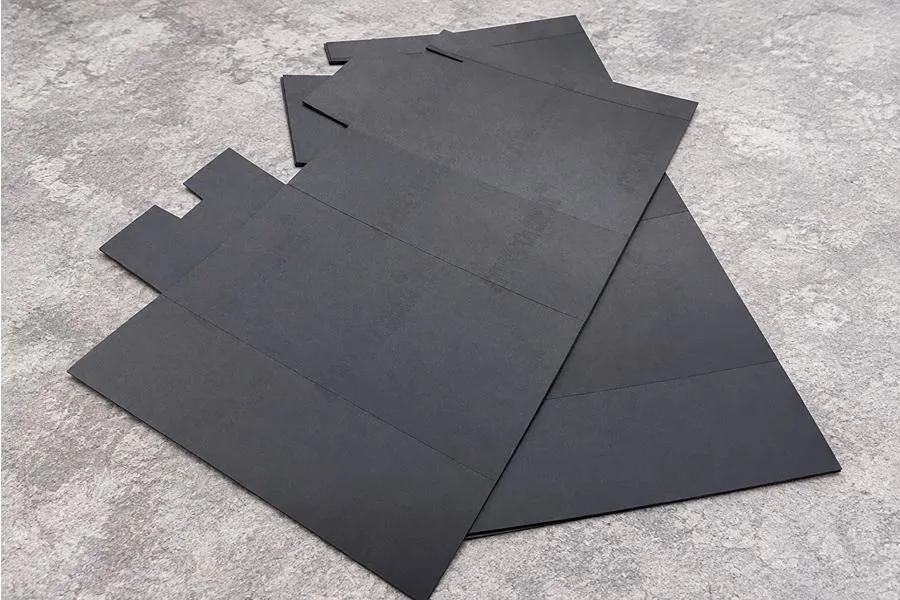
Insulation and Gasket Materials
4) Rigid or Thick Sheet Materials
When Plastic Sheet, Fiber Sheet, and thicker composite boards cannot bend continuously through Rotary die rollers, they can be processed by Flatbed cutting. Flatbed has lower requirements for material flexibility and is also more suitable for large-format sheets.
5) Multilayer and Thick Composite Materials
Flatbed can process thick composite materials such as Foam + Adhesive, Rubber + Adhesive, and Insulation + Tape. For example, 5 mm EVA Foam + Double-Sided Tape can be laminated first and then die-cut to final shape in one Flatbed operation.
5. How to Choose Between Rotary and Flatbed Die Cutting
The selection can be compared based on material thickness, feed format, production volume, processing requirements, and tooling cost.
| Project Condition | Rotary Die Cutting | Flatbed Die Cutting |
| Thin Flexible Materials | More suitable | Can be processed |
| Thick Foam / Rubber / Silicone | Limited by material thickness | More suitable |
| Roll Material | More suitable | Can be processed |
| Sheet Material | Not the primary choice | More suitable |
| High-Volume Continuous Production | More suitable | Lower production efficiency |
| Prototype / Low Volume | Relatively higher tooling investment | More suitable |
| Processing Accuracy and Batch Consistency | More advantageous | Meets standard die-cutting requirements |
| Kiss Cut + Release Liner | More suitable | Can be processed |
| Continuous Multilayer Lamination and Registered Cutting | More suitable | Can be processed; weaker continuous multi-station capability |
| Large Thick Parts | Limited by Web Width | More suitable |
| Initial Tooling Cost | Generally higher | Generally lower |
| Roll-to-Roll Production | More suitable | Not the primary method |
For thin roll materials, high-volume production, continuous Kiss Cut, or Roll-to-Roll processing, Rotary is generally the preferred option. For thicker materials, sheet materials, large parts, or low-volume production, Flatbed is generally the preferred option.
For materials such as Foam, Rubber, and multilayer Adhesive Composites that are prone to compression, rebound, or delamination, use the actual production material for trial cutting before mass production to confirm dimensions, cut quality, Kiss Cut depth, and interlayer condition.
6. Conclusion
Rotary Die Cutting is better suited to thin flexible roll materials, high-volume production, Kiss Cutting, and continuous multi-station processing. Flatbed Die Cutting provides better capability for thicker Foam, Rubber, Silicone, and sheet materials and is also more suitable for prototypes and low-volume production.
iTrustfab provides precision die-cutting and custom processing services. You can provide drawings, material, thickness, tolerance, and purchasing quantity. Based on the project requirements, we can recommend a suitable Rotary or Flatbed Die Cutting solution and support sample validation.